
What Volunteering Taught a Seasoned Association Executive: Shelly Joines, Client Account Administrator, Partners in Association Management
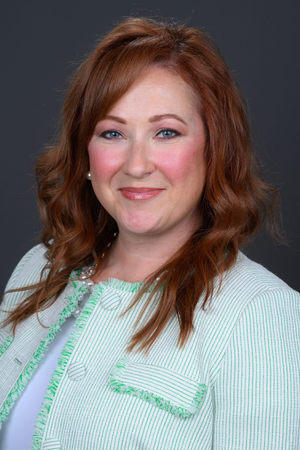
Most association staff spend their careers on one side of the volunteer relationship. Shelly Joines, Client Account Administrator at Partners in Association Management, has spent 18 years on both, splitting her time between staff-side account work and volunteer leadership roles of her own.
That dual vantage point has shaped how she operates. Sitting on “the other side of staff” has given Joines a working sense of the real volunteer experience, and how easily good intentions collide with real constraints on time, energy, and competing priorities. It has also changed her instincts as a communicator, pushing her toward more frequent and considered updates with her own team rather than the sparse check-ins that come naturally when workloads pile up. Stepping into unfamiliar volunteer roles, including public speaking commitments that pushed her outside her comfort zone, gave Joines a firsthand sense of the discomfort she regularly asks members and volunteers to work through. That experience now shapes how she designs deadlines, frames requests, and thinks about what kind of support volunteers need.
In this conversation with Association Adviser, Joines talks about what leading as a volunteer taught her that staff-side experience alone couldn’t, and what association professionals get wrong about the people who show up to help.
Association Adviser: You’ve spent 18 years with Partners in Association Management and have worked nearly every seat on the AMC side—membership, marketing, committee and board management, certifications, exhibitors, sponsors, speakers, registration. How has that range shaped the way you think about supporting your associations?
Shelly Joines: I’m incredibly grateful for the depth and breadth of experiences that I’ve gained while with Partners. Each organization and department brings with it different strengths—and the reality is that we have an opportunity to pull from those successes and apply it towards new programs and benefits for all associations we support.
That variety in responsibilities also allows me to view new proposals with a 360-degree perspective and bring better questions up earlier. I understand that a win for any department is a win for everyone. So, part of that is a teamwork mentality! But it also allows me to ask critical questions of how these new programs may positively or negatively impact various stakeholders—having been in their seats at some point.
Just today, I invited a sponsor to send in a video about themselves to show at our conference, and they were at a loss with what to talk about. Because I support the membership committee and participate in event planning, I’m around for the conversations people are having and know what questions aren’t being answered. That allowed me to help the partner understand their unique selling point within the organization and how to better connect with attendees and members.
AA: Alongside your professional work, you’ve given back to the community, volunteering as an alumni for your sorority at both the collegiate chapter and national headquarters level, as well as serving as a board member and speaker for FSAE. What prompted you to say yes to serving on “the other side of staff” in these roles?
SJ: Oddly enough, I barely remember a time when I wasn’t volunteering with Chi Omega or FSAE in some capacity. And the first reason is—because someone personally invited me to be engaged and shared where I would bring value. It’s not enough to ask someone to volunteer—you have to identify what the benefit is to them and to the organization they’re serving to be worthy of the time they’re going to spend away from home, family, and work.
That said, once I got connected, I found so much purpose in giving back and helping others. I realized that so much of my success was because someone took the time to break down processes to me, shared solutions, and encouraged me. It was never a question of if I would continue to pay that forward—it was just a question of how.
But I think the breakthrough for me (and perhaps why I continue) was that I became a more confident professional when I started teaching and leading others. I realized I have a great arsenal of experiences and knowledge to share, and distributing that is only reinforcing those decisions for the future so that I can be faster, nimbler, and more prepared.
AA: You’ve mentioned learning a lot in the last two years about how and when communications are most effective. Can you walk us through what that shift looked like, and how the experience of being a volunteer changed things?
SJ: I had a LOT of significant changes from fall 2024 through today: serving as Client Account Administrator for a national organization and growing them year-over-year, taking on increased responsibility for a Florida-based association while simultaneously doing the same for another national organization, all supporting different industries. I also transitioned away from an organization I had poured so much heart into while taking on new program areas I didn’t yet understand.
It was easy to feel overwhelmed, and my communication with my team became less frequent and detailed. Then, for some reason, I also volunteered as a Social Chair advisor for Chi Omega. If I didn’t have time before, I certainly had less now!
But then I began mentoring a student who was eager to learn, willing to show her work, and consistently kept me updated on her outreach. After several calls, she started anticipating what I would ask for before I even asked.
That’s when it clicked: I enjoyed working with her because her preparation made our time valuable. Her updates and follow-ups allowed us to have strategic conversations. I got excited again and started bringing that perspective back to my role. I looked for ways to provide more frequent and detailed updates and give my team a more comprehensive view of ideas and opportunities. Changing how I prepared for meetings changed the conversations.
By serving as a volunteer, I finally understood how to better serve my team and make us all successful.
AA: Advising collegiate students has given you a new lens on being a team member. What has that experience taught you about leadership or mentorship that you didn’t fully grasp from the staff side?
SJ: Everyone assumes that the mentee is going to learn from the mentor—that is why you’re there, to bring years of lived experiences and solutions to the next generation in hopes of making the path easier for them, or perhaps to build excitement in a career path.
The reality is that in every well-matched mentor pairing I’ve seen, the mentor learns far more! As a mentor, I set the tone for meetings, so I’ve had to learn to adjust my communication style and energy, and determine when and how to have difficult conversations. All of that has provided a practice ground for how to do the same with my team, committees, members, leaders, sponsors, and vendors.
I’ve learned how to become more understanding and clear with my audiences.
AA: You’ve talked about respecting that volunteers have real jobs, families, and obligations outside of the work they do for an association. How has that understanding changed your expectations for volunteers—and your appreciation for the work they do?
SJ: I see firsthand how I sometimes struggle to maintain my job, family, gym, hobbies, and volunteering. It sometimes can take me a week to give myself time to really sit and focus on a contract or proposal, so I’m asking the right questions early on. But my students are gracious and persistent!
So, when I want to give my organizational volunteers two days to respond to an email because we’re up against a deadline, I’ve realized that isn’t always realistic. Or if it is realistic to me, it may not be to volunteers with other priorities. I’ve learned to buffer deadlines where I can and have implemented methods to send my team reminders.
While association staff are paid for their work and make projects a priority, volunteers don’t always live by our timelines. And that’s ok. As leaders, we have to understand that our volunteers have professional and personal lives and find options that are workable for all.
AA: Looking back, what’s a perspective you only gained by stepping into volunteer roles yourself, one you don’t think you could have arrived at by staying purely on the staff side?
SJ: It’s extremely easy to go to events and learn from FSAE speakers and presentations, just as it’s easy to attend alumni mixers and connect with old friends. But the growth never really happens there—does it?
There’s a challenge in saying “yes” when asked to speak publicly at small roundtables or panel discussions at a conference, and when you’re encouraged to speak up in the boardroom. Is it fun the first time? Maybe not. But you’ll always be proud of yourself for rising to the occasion. Now think for a moment about how often you ask your volunteers and members to do the same—do they need more support to be successful?
It’s been intimidating walking into a boardroom of people you’ve learned from for over 10 years. But growth comes from being present, prepared, asking questions, and considering solutions from multiple vantage points to serve the larger group.
So, the next time an opportunity presents itself, and you’re invited to contribute, remind yourself that there are far more people out there wanting you to succeed than wanting you to fail. And volunteering has allowed me to experience that.
Photo courtesy of PeopleImages/Shutterstock.com.