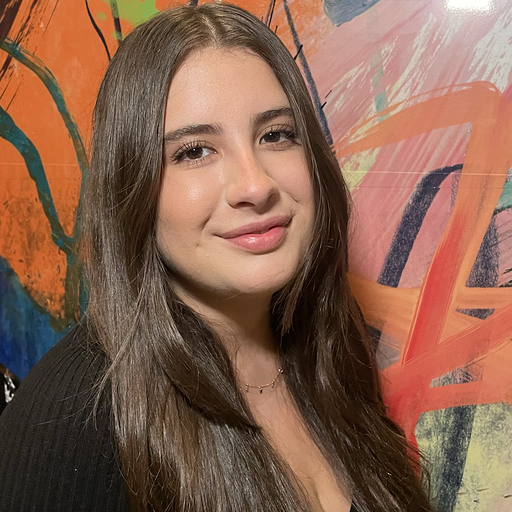
Strengthening Member Value Through Volunteer Leadership: DJ Johnson, American Speech-Language-Hearing Association

Volunteer leaders can bring energy, perspective, and deep commitment to an association’s work, but impact depends on more than enthusiasm alone. To strengthen member value, associations need volunteer efforts that are aligned with strategic priorities, supported by strong staff partnerships, and grounded in a clear understanding of what members need now and next. When that alignment is in place, volunteer leadership becomes more than a governance function. It becomes a driver of engagement, belonging, and long-term organizational strength.
In this conversation with Association Adviser, DJ Johnson, Senior Director of Association Governance Operations at the American Speech-Language-Hearing Association (ASHA), shares his perspective on how associations can better connect volunteer leadership to member value. Drawing on over two decades of experience across governance, leadership development, and volunteer engagement, he explores the importance of strategic alignment, feedback, strong volunteer-staff partnerships, and leadership pipelines that keep associations forward-looking and responsive to their members.
Association Adviser: In your ASAE Volunteer Leadership Retreat session, you focused on aligning volunteer projects with strategic priorities. Why is strategic alignment so critical to increasing member value?
DJ Johnson: At the retreat, I was mainly connecting with high-level association executives who are serving in volunteer roles for ASAE. When most people are serving as volunteers, we all want to make a positive impact and often also want to bring our unique perspectives and insights into the role we are tasked with.
Aligning with the organization’s strategic priorities allows volunteers to harmonize their unique skills and perspectives with the larger goals of the organization. Without alignment, projects could be in danger of becoming only what the volunteer leader feels is important as opposed to what the organization and the membership need. It’s a delicate balance to make sure there is both space for volunteer creativity and innovation while still maintaining boundaries that keep projects successful.
One hypothetical I often pose to my staff teams is, “Which is harder to manage, a volunteer who has a lot of passion and creativity but doesn’t understand how their charge fits into the strategic priorities? Or a volunteer who understands the priorities and how an organization approaches its mission but puts very little passion or innovation into the work of the organization?” In an optimal situation, as staff, we should create an environment that fosters strong feelings of connection and understanding of the organization while also keeping volunteers educated about the governance of the organization.
AA: ASAE’s strategic framework includes a priority to “Create Member Value.” From a governance and volunteer leadership perspective, what does that look like in practice?
DJ: I was so excited as the inaugural Chair of ASAE’s Diversity Education Leadership Program (DELP) Advisory Council to see this is a priority for ASAE. All members want to see that the members are a priority of our professional organizations and to get value out of our membership. DELP specifically focuses on helping scholars in the program utilize the full depth and breadth of the value of their ASAE membership. So, anything ASAE does to improve member value helps the program as well.
Using DELP and similar leadership development programs as a metaphor to over-simplify the concept of member value—to create true member value, an organization needs to be able to connect members to the opportunities, knowledge, resources, and/or people that help the members be successful in achieving their personal and professional goals that align with the organization’s mission.
The difficulty in achieving that goal is that what is valuable to a member will be different depending on their unique situations—where they are in their career, in their life, and what external factors are greatly impacting their lives.
To create true membership value, an organization must make constant efforts to update its surveying of the membership, environmental scanning, and improving governance practices to always keep the organization forward-looking and stay aware of the ever-evolving needs of the membership.
In practice, I believe this means the members should regularly see how their benefits are being expanded and evolving. The board, staff, and other leaders in the association should always be asking, “What’s next? What more could we do that would have a greater impact on our members?” Then the association needs to educate the membership about these discussions and changes so that the membership evolves alongside the organization.
AA: You outlined five actions for volunteer leaders, including utilizing feedback, cultivating engagement and belonging, and leading with shared purpose. How do these actions directly influence member engagement outcomes?
DJ: Countless studies over the years have shown how members who have meaningful engagement within their organization are often more satisfied, active, and loyal. They also help in recruiting the next crop of engaged volunteers and leaders.
Although this rarely happens, it always surprises me when an organization doesn’t take time at the end of a volunteer meeting or event to ask people in the room how the event went, in addition to sending out post-meeting surveys. It is equally important that whatever insights are gained or changes are made be communicated directly to the membership so that members see how their voice matters.
Most organizations are seeing a decline in responses to surveys and other more passive post-evaluation tools. Gathering feedback while you have people in front of you is something I wish associations did more of.
AA: You emphasized normalizing feedback as a tool for growth. How can association leaders build a culture where feedback strengthens engagement rather than feeling evaluative or transactional?
DJ: When possible, start or end every leadership or project meeting with an opportunity to share feedback about the meeting itself or a recent program. And then in the next meeting, make sure to share how that feedback was incorporated to make a difference.
I recently joined the Association Governance Operations Team at the American Speech-language Hearing Association (ASHA) to support and oversee all governance operations. I’ve been very impressed by how feedback and debriefs are built into most leadership meetings and programs, including the board meetings. We gather feedback in the meeting, send a post-evaluation survey, and then send a follow-up list of the actions being taken from the feedback and any outstanding items. I’ve worked at several nonprofits, and I have to say ASHA has the best approach of any I’ve seen.
Members and leaders need to see their feedback in action—and they need to see it quickly. That is the only way to keep up the motivation to take the time to give us the vital feedback we need to stay relevant to our members. And connecting those results back to your mission and purpose helps keep alignment.
AA: In your session, you encouraged leaders to define success not just by outputs, but by impact. How can volunteer leaders shift their thinking from task completion to meaningful member impact?
DJ: In working with many different types of leaders over the years, I’ve seen many different ways in which leaders evaluate success—for some, it is completing all the tasks or charges put in front of them on time and as prescribed. For others, it is getting direct feedback or seeing the results of their efforts by hearing from the people it has impacted, which can be tough when the outcome of a project might take months or years as opposed to within the leader’s term. And for others, it is about having solid data so they can quantitatively measure the impact of their efforts. We often ask leaders to paint a picture of what success looks like and, “how will we measure it?”
I think that to truly shift thinking, we can take a simpler approach. When measuring impact, I think it is important to ask three questions:
- How is the organization/membership value/program stronger because of these actions? Or if not, what can the organization learn from this experience to make the organization stronger in the future?
- How did those who engaged in the program, whether implementing or experiencing, gain a stronger understanding or connection to the organization as a result of the program?
- How can more people (or expanded perspectives) be incorporated into these efforts in the future to expand reach, richness, and impact of the program?
AA: You spoke about building strong volunteer–staff partnerships. What are the characteristics of an effective partnership, and how does it contribute to stronger member experiences?
DJ: Beyond mutual respect, trust, and a sense of shared purpose, I think there are three strong things that contribute to a culture that creates strong volunteer-staff partnerships:
- Resources, training, processes, and strong governance that define the roles and responsibilities for each role and most importantly how each side supports each other and the larger mission.
- Structuring staff-volunteer meetings and interactions that lean into the strengths of the partnership instead of blurring the lines of the roles. (For example, keeping volunteer leaders focused on strategy or providing unique member perspectives, and staff focused on strategic and sustainable implementation.)
- Fostering a culture that supports and empowers both volunteers and staff to spend time better understanding each other. What are our shared and different motivations? How does each member of the partnership approach opportunities differently? A strong understanding allows people to grow and learn in the process and maintains trust and respect through both success and failure. Each side needs to prioritize the partnership.
AA: Matching volunteers to roles that fit their strengths was another key theme. How does intentionally aligning strengths with responsibilities improve both engagement and member value?
DJ: Everyone wants to feel valued and leveraged to have a strong impact. People also have specialized skills and talents. I wouldn’t want a skilled drone pilot to fly my commercial flight, nor would I want an airplane pilot to automatically be a drone pilot expert. Aligning volunteers with their strengths shows that we are truly “seeing them,” and it also helps an organization leverage the diversity of skills in the volunteer pool. Sometimes that means leaning into the aspects of a role a volunteer will be strong in and propping them up in the areas they are not as strong in.
I volunteer in many different roles in my personal life, and I always want to do a good job. I know my strengths lie in building and bridging relationships, translating context across different segments, and being the public-facing representative for a program. I do not have a deep knowledge of educational program design, so I lean on others for that expertise when I’m volunteering on an event planning committee.
AA: You’ve presented on building leadership pipelines in past sessions. How does investing in future volunteer leaders support long-term engagement and organizational sustainability?
DJ: One of the recurring criticisms I’ve heard from emerging leaders and professionals at many of the organizations I’ve had the pleasure to serve is a concern that younger voices don’t have an opportunity to provide input on the strategic direction of their home associations. Some organizations, like the American College of Obstetricians & Gynecologists, actually designate space for emerging professionals (in this case, residents) on their board and committees.
ASAE’s Foresight Works has identified two strategic drivers of change that relate to this challenge in a way. First is that as time goes on, the public is trusting institutions— including associations—less, which can even include our members. And second, as the American workforce becomes grayer, with people retiring later or unable to retire, it leaves less space for emerging professionals to move up.
I worry that this happens in volunteering too—if emerging professionals and other groups don’t see themselves reflected in an association’s leadership, they are less likely to believe their voices are included. And if the volunteer pipeline isn’t allowing new professionals to get involved in deep and meaningful ways, then they are less likely to stay involved. And if we can’t keep them engaged, it becomes harder to retain them as members.
AA: Collaboration was a major component of your retreat session. What practical strategies can associations use to encourage cross-committee or cross-chapter collaboration that benefits members?
DJ: Develop intentional opportunities and spaces for different volunteer groups to meet as a group and learn more about the priorities and opportunities an association is considering, and build in a process to solicit meaningful, actionable feedback from your engaged leaders. The annual ASAE Leadership Retreat is a great example of this. At ASHA, we have a specific “Committee Day” during our annual Convention that allows us to bring together most of our standing committees, both together as a group and individually. Silos don’t break down organically—you have to put some effort into breaking barriers down.
AA: When you think about increasing engagement across an entire association ecosystem, including staff, volunteers, chapters, and members, what is the one leadership principle that makes the biggest difference?
DJ: The leadership principle that makes the biggest difference in engaging an entire ecosystem within an association is leadership models based on highly collaborative and alignment-focused leadership and governance. Alignment may keep efforts and resources focused on the larger mission, but without true collaboration from all parts of an association, staff, volunteers, components, and general members, people could feel aligned programs were not developed with them in mind. With all the different sources of information and competition, I think this is about more than creating more seats at the table—all of us should ask, how do we strategically increase the size of the table?