
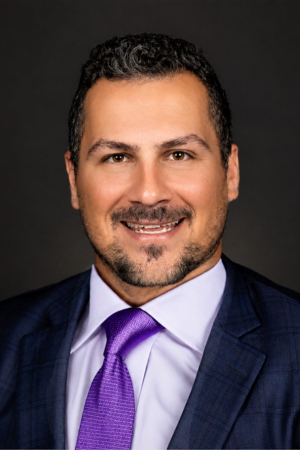
Redefining Membership from the Ground Up: Jordan DeBettencourt, Vice President of Membership & Engagement, Finseca
When most of your members operate inside large organizations, an individual self-paid enrollment model will only take you so far. Finseca, the professional association for financial security professionals, recognized that gap and rebuilt its membership structure around how its members actually operate.
The redesign centered on firm-level billing and operationally embedded renewals—structures that removed friction for members and created more durable retention at scale. Alongside that, Finseca built a Member Health Score, a composite engagement metric tracking tenure, activity, and company affiliation, that gave staff an ongoing read on renewal risk throughout the year and enabled earlier, more targeted outreach. Finseca’s subsequent 2025 membership campaign resulted in an 87% renewal rate, exceeded goals, and took home a 2026 ASAE Gold Circle Award.
Jordan DeBettencourt, Vice President of Membership and Engagement at Finseca, led this work. In this conversation with Association Adviser, he explains what it took to embed membership into firm operations, how the Member Health Score changed the way his team makes decisions across the year, and what associations navigating similar growth should think through when beginning similar endeavors.
Association Adviser: What was the core problem you were trying to solve with the membership redesign?
Jordan DeBettencourt: Between 2020 and 2025, Finseca grew from roughly 3,000 to nearly 13,000 members, and was on a path to growing to 40,000 members by the end of the decade. While we were growing quickly, we realized we were still operating a fundamentally individual, self-paid enrollment structure in a world where most of our members sat inside larger organizations. So, we had to get creative, especially given the fact that we needed to scale not only our growth, but also our engagement and renewal strategies.
The self-paid model assumes a member proactively decides to renew every year. That works fine with 3,000 members, but at 13,000, you’re relying on thousands of individual discretionary decisions, and that’s a fragile foundation when so many are relatively new members (or new within the last few years). The redesign was about recognizing that our membership had to align with and leverage how our target companies operate, not ask companies to work around our membership structure.
AA: What did it actually mean to “embed membership into company operations,” and how did you get new partners on board?
JD: Embedding membership operationally meant moving renewals from a personal decision to a structural one. Many financial services organizations have existing strong cultures and structures in place. We wanted to allow our membership models to align with these existing structures. This includes everything from internal payment schedules, stakeholders, spokespeople, finance teams, etc.
Getting partners on board required leadership-level conversations. We needed a decision maker who understood how the company operates and how we can layer onto to the existing systems. They also needed to be senior enough to authorize changing how membership flowed through their systems.
These conversations sometimes included both internal and external stakeholders, board members, Finseca executives, etc. The value proposition also had to shift. Instead of “here’s why you (as an advisor) should join,” it became “here’s why this is good for your company culture, retention of your own people, alignment with your business model, and for the industry in general.”
AA: How did dues restructuring connect to the enterprise model, and how did you manage member expectations through that change?
JD: At our core, our members are individual financial advisors, and that hasn’t changed. And we believe our members need to have skin in the game and be paying for their memberships. Where we have evolved is how we get paid. We recognized that we don’t need to have every advisor give us their credit card directly.
As an example, many insurance carriers have sales offices around the country, and many of those offices are run by our members. Any one of those offices may have 20-200 financial advisors. What we realized is that the advisors in those offices would rather pay their office directly and have the office then pay us the total rather than signing up under a credit card. So not only does that process help us scale, but it is actually giving our members what they want in many cases.
This allows us to centralize billing and then helps us from an engagement standpoint, as well, because an entire office is on the same onboarding plan and schedule. And, it puts us in a place where we don’t need to slash our prices and change the end model.
AA: Can you talk about the Member Health Score—what does it measure, and did implementation change how your team operated?
JD: Our Member Health Score allows us to track engagement data on our members. This approach segmented members by a combination of tenure, engagement activity (in-person and virtual), and company to identify renewal risk signals. To start, we wanted to identify members who were least likely to renew.
As an example, a member who would have been tagged as RED (high renewal risk) would be a new member who signed up on their own on a credit card, has been a member for six months, and hasn’t attended any webinars or events or opened any e-mail. Those people need attention, and if we’re able to save even half of the members that fit that criteria, suddenly, we’re making meaningful improvements to our renewal rates.
Staff reviewed that data monthly and quarterly, which meant we weren’t looking at retention as an annual problem anymore. Instead, we were watching the trend lines in real time. The operational shift was significant: Instead of a renewal-season scramble, our team was making resource-allocation decisions throughout the year based on where the risk was clustering. This shift led to a more personalized and earlier touchpoint, not just 60- and 30-day reminders. This became the intervention tool for first-year and at-risk members specifically, which is where our first-year retention results showed this was working.
AA: When a member was flagged as at-risk, what did proactive engagement actually look like?
JD: What we built was an ongoing read on where members were in their journey, and we responded to that in real time rather than waiting for a renewal window to tell us something was wrong.
For first-year members, the intervention started before any risk signal appeared. A new member got a personal welcome from our staff early on, welcoming them to the organization and identifying a personal contact they can reach out to, and putting a face to the name. The thinking was straightforward: early disconnection is the most common path to non-renewal, and you can’t wait until month 10 to address it.
For at-risk members we identified through our tracking, the engagement tools varied by situation. For someone who wasn’t opening emails, we’d try a phone call. For a company that had some members who’d gone quiet, we’d leverage their firm contacts rather than going directly to the individuals because the relationship with the internal leader was often stronger than our relationship with the advisor.
For the members who were episodically engaged, showing up for one event and then disappearing, we’d send a targeted invitation to a specific program relevant to their work. Not a general “here’s everything Finseca offers” message, but instead, something like: “We’re running Conversations that Close next week, and based on what we know about your practice, this is the one you should be at.”
The thing that changed operationally was that our team stopped thinking in terms of renewal cycles and started considering member health over time. Monthly and quarterly check-ins on engagement data meant we weren’t ever surprised. And honestly, that shift in how we tracked things is probably what drove the first-year retention number to go 32% over budget. You can’t address what you’re not watching.
AA: Your inclusion efforts seem to have been built into the strategy rather than running separately. How did that shape design and delivery?
JD: The most important design decision was using data to identify who wasn’t engaging rather than defaulting to broad uniform outreach. That sounds simple, but it’s actually a significant departure from how most associations run communications, in which everyone gets the same messaging—one newsletter, one renewal sequence, etc. When you look at which segments were historically under-engaged or at higher churn risk, you can design interventions that actually reach them.
The World Financial Group (WFG) partnership is the clearest example. WFG is one of the largest life insurance distribution organizations in the country. Over 50% of its agent force is female, with thousands of first-generation Americans and many with less than five years in this profession. Prior to 2024, they didn’t really have a home in the association world until Finseca brought them into the organization. The group represents areas where our profession needs to continue to grow and develop leaders.
That relationship required dedicated infrastructure, with a landing page, an exclusive webinar series hosted by the CEO, an in-person event in DC, and mainstage time at the leadership conference. None of that would have happened if inclusion was an afterthought. The business case was also clear: WFG’s network is 75,000+ agents with over 60 languages and 55% minority participation. If your model only serves one type of financial services professional, you’re leaving a significant portion of the profession—and the families they serve—outside the tent.
The board diversity piece reinforces this architecturally. When the people making strategic decisions represent the full distribution of the profession—by firm type, career stage, and distribution model—the strategy that comes out of those conversations is structurally more likely to serve the whole membership.
AA: For an association earlier in this journey, what’s the most important decision they need to get right?
JD: First, know your members. Know how they like to be communicated with and what benefits they value—and equally important, know what they don’t like and don’t want to see. Early on, identify who your membership champions within your membership are and make it as easy as possible to help. So many people are willing to help—you just need to give them a blueprint. The goal should be minimum input and maximum output when working with members.
Second, don’t try to build one model that fits everyone. The instinct at most associations is to simplify—one price, one enrollment path, and one renewal sequence. Finseca’s results suggest the opposite approach works better: creating flexible structures that meet each distribution type where they are operationally. That’s harder to build and explain, but it’s what actually drives retention at scale.
Photo courtesy of Summit Art Creations/Shutterstock.com.